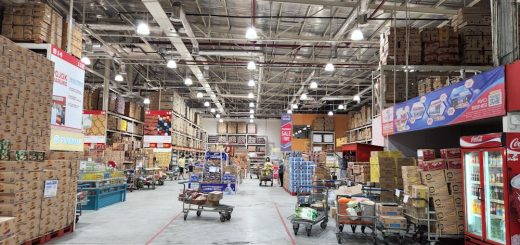
The Real Cost of a Return: A Cross-Border Seller’s Story From China to Europe & the USA
Most cross-border sellers think of returns in very simple terms:
“Okay, I’ll lose one shipping label. That’s it.”
But for cross-border e-commerce, one return quietly eats far more than the outbound shipping fee. Global studies estimate that processing a single ecommerce return can cost retailers around USD 30–40 per item, once you add reverse shipping, labour, repackaging and lost value. In some cases, returns consume 20–65% of an item’s original value and can swallow 30–35% of annual sales revenue.
For cross-border orders—China → Europe/UK/USA—reverse logistics is even more expensive and complex than domestic returns because parcels must cross borders again, pass customs twice, and be processed in overseas or local return warehouses.
To make this real, let’s walk through one seller’s story.
1. Meet Laura: A Cross-Border Seller Who “Loved Free Returns”
Laura is based in Valencia, Spain. She runs a small cross-border brand selling compact heaters and humidifiers sourced from suppliers in Shenzhen and shipped to:
- Spain, France, Germany and Italy, plus
- A growing customer base in the USA and Canada
To win buy-box positions and keep conversion rates high, her store offers:
- “Fast shipping from China” (7–12 days via consolidated lines)
- “No-hassle free returns in Europe & USA”
On paper, it looks great. Her average order on a European marketplace:
- Selling price: €39.90
- Product cost (ex-factory): €12.00
- First-leg shipping from China to Europe (economy air through a forwarder): €6.50
- Platform fees + payment fees: €6.00
- Ads and influencer spend allocated per unit: €5.00
Before any returns, the “paper profit” for a successful order is:
€39.90 – €12.00 – €6.50 – €6.00 – €5.00 ≈ €10.40 gross margin
After allocating overheads (SaaS tools, team salaries, rent, etc.), Laura estimates the true net profit is about €3 per piece.
Not amazing, but acceptable—if orders keep growing.
Then the first winter season returns hit.
2. The Return That Looked Harmless (But Wasn’t)
One customer in Germany buys a heater for €39.90, uses it for 10 days and then opens a return request:
“Not as warm as expected. I want to send it back.”
Because Laura advertises “free returns within 30 days”, she accepts. In her mind, she’s prepared to sacrifice one return label and move on.
What she doesn’t see (yet) is that this single return will quietly eat through:
- Outbound costs that are already sunk
- Reverse logistics (return shipping and consolidation)
- Warehouse processing and labour
- Margin loss on discounted resale—or a complete write-off
Let’s break down the full journey of this one returned unit.
3. The Four Hidden Cost Buckets Behind Every Cross-Border Return
3.1 Sunk Costs: The “Outbound” Money That Never Comes Back
Even if the customer returns the product, four cost items are already gone:
- Product cost:
- Laura has already paid the factory €12 when the item left the warehouse in Shenzhen.
- Outbound international shipping:
- The heater was in a consolidated shipment from China to a European hub (e.g. Belgium/Netherlands) at €6.50 per piece.
- Platform & payment fees:
- Some marketplaces refund part of the commission on returns; some don’t. Payment processors almost never refund 100% of card fees. A realistic assumption: €3–4 is gone forever.
- Ad spend / customer acquisition:
- That click from a TikTok ad or sponsored product ad? Already paid. Laura averages €5 marketing cost per order across her funnel.
Whether the customer keeps the heater or returns it, these four are sunk costs. They don’t disappear from the P&L just because the order is refunded.
This matches global data: reverse logistics isn’t just about shipping back; it starts with lost forward revenue and sunk costs that stay in the system.Zeta Global+2omniful.ai+2
3.2 Reverse Logistics: The Return Trip Is More Expensive Than You Think
For cross-border orders, reverse logistics usually costs more than forward delivery because returning products involves fragmented flows, complex routing and smaller volumes.omniful.ai+2filuet.com+2
Laura has two choices:
- Local returns hub in the EU
- Direct return all the way back to China
Sending everything back to China is almost always more expensive and slow, so she works with a European returns warehouse that consolidates returns from multiple countries.
For this single heater, the path looks like this:
- Customer prints a prepaid return label (local courier pickup or drop-off point)
- Average cost for EU domestic label + pick-up: €6–8
- The parcel goes from customer → local depot → Laura’s EU returns warehouse
- Transport and handling often included in that same label price
- Every few days, the returns warehouse consolidates many sellers’ parcels into pallets to send to a central hub (e.g. in Germany or the Netherlands).
If Laura decided to send the item back to China, there would be another leg of international shipping + customs—often more expensive than simply writing off the unit locally.
A realistic reverse logistics cost for this one heater, just within Europe:
Return label & handling: about €8–10 per unit
Global research supports this scale: cross-border reverse logistics often exceeds forward delivery cost per unit because flows are smaller and less predictable.filuet.com+2omniful.ai+2
3.3 Warehouse Processing: The Most Expensive, Most Invisible Piece
Once the heater reaches the returns warehouse, the real work begins:
- Check-in & identification: scan label, match to order, log in the system
- Unpacking & inspection: test basic functions, check for damage or missing parts
- Grading decision:
- A-grade (like new) → can be sold as new
- B-grade (open box, lightly used) → can be resold at discount
- C-grade (scratched, missing, damaged) → liquidation or parts salvage
- Cleaning & reboxing: wipe down, replace packaging if needed
- Relabelling & restocking: create new SKU (e.g. “refurbished/open box”), place into shelf location
This takes people, time, space, systems and packaging materials.
Industry benchmarks show that processing and restocking a return can cost retailers USD 10–40 per item, depending on category and level of manual work.nShift+2seebiz.com+2 Labour is consistently the largest component.亚历山大·贾维斯+1
For Laura’s heater, her returns warehouse charges:
- €4.00 per unit for receiving, basic functional check and grading
- €1.50 for repacking & relabelling
- Plus a small storage fee if it stays more than 30 days (ignored here for simplicity)
So we’ll use a conservative processing cost of €5.50 per unit.
3.4 Resale or Write-Off: When Your Margin Gets “Discounted Twice”
Now Laura must decide what to do with the returned heater.
Because it has been used for 10 days and the packaging is opened, she can’t sell it as brand-new at €39.90 without risking bad reviews.
Her options:
- Resell as “open box / refurbished”
- New price: €39.90
- Refurb price: €27.90 (30% discount)
- Bundle into clearance lots for resellers
- Unit price even lower
- Donate or recycle
- Revenue effectively zero, possible disposal cost
Let’s assume the best realistic scenario: Laura resells as refurbished at €27.90 on a marketplace.
For the second sale, she pays:
- Platform & payment fees (say 15%): ≈ €4.20
No extra marketing this time; she relies on organic traffic or a small “open box deal” badge.
Her gross profit on the second sale looks like:
€27.90 – €4.20 – €12.00 (original cost price already paid) ≈ €11.70
Important: She pays the product cost only once, but this second sale is now paying back a hole dug by the first return.
4. Putting It All Together: How One Return Destroys a “Profitable” Order
Let’s reconstruct the entire life cycle of that single heater.
4.1 First Sale (Before Return)
- Revenue:
-
- €39.90 (original sale price)
-
- Costs:
- – €12.00 product cost
- – €6.50 outbound shipping (China → EU)
- – €6.00 platform & payment fees
- – €5.00 ads
- Paper gross margin:
- ≈ €10.40
After overheads, she keeps ~€3 net. So far so good.
4.2 Return Costs Added
Once the customer returns the heater:
- Reverse logistics (EU label + return to warehouse): – €9.00
- Warehouse processing (check, grade, rebox): – €5.50
Total incremental return-handling cost:
– €14.50
4.3 Second Sale (Refurbished / Open Box)
- Revenue:
-
- €27.90 (refurbished price)
-
- Costs:
- – €4.20 (platform & payment fees again)
Second sale gross margin:
≈ €23.70
(remember: product cost is counted only once)
4.4 Full “Lifetime P&L” for This Single Unit
Let’s combine all flows:
Total revenue:
- Original sale: + €39.90
- Refurbished sale: + €27.90
- Total: €67.80
Total costs:
- Product cost: – €12.00
- Forward shipping: – €6.50
- First platform + payment fee: – €6.00
- Ad spend: – €5.00
- Reverse logistics: – €9.00
- Warehouse processing: – €5.50
- Second platform + payment fee: – €4.20
Total cost:
12.00 + 6.50 + 6.00 + 5.00 + 9.00 + 5.50 + 4.20
= €48.20
So on paper:
€67.80 revenue – €48.20 cost = €19.60 gross margin
That doesn’t look terrible—until you remember:
- That €19.60 must now cover its share of fixed overheads (team, tools, rent, returns system), twice the handling touchpoints and a lot of additional complexity.
- The original business model assumed ~€3 net profit per unit if sold once. This one item required two full sales cycles and a return process… to end up with far less “profit per touch” and much more risk.
When you spread warehouse overheads and operational complexity over that single product, the true net result is very likely negative—just as multiple industry analyses show that returns can consume 20–65% of the item’s value and up to 35% of total sales revenue.Shopify+2亚历山大·贾维斯+2
That’s why seasoned operators often say:
“On a good day, we make €3 when we sell it once.
On a bad day, we lose €20 when it comes back.”
5. Where Cross-Border Sellers Really Lose Money: Not Returns, but “Unmanaged Returns”
Looking across different brands, the worst profit leaks don’t come from “high return rate” alone. They come from chaotic, unstructured return flows, especially in cross-border scenarios:
5.1 No Full-Chain View of Cost Per Return
Many sellers only see:
“This month, return labels cost me €X.”
They don’t merge into one view:
- Sunk product & outbound costs
- Reverse logistics cost (labels, pickups, overseas consolidation)
- Warehouse labour & processing
- Resale discount or write-off
Yet reverse logistics experts emphasise that most return pain is hidden: labour, storage, data entry and lost value rarely show up as a single line item.omniful.ai+2tompkinsinc.com+2
5.2 Return Paths “All Over the Map”
Without a clear strategy, returns enter through multiple doors:
- Some customers mail items directly back to China
- Some return to local stores or micro-warehouses
- Some go to an official returns center, others to ad-hoc addresses
Result: parcels are scattered across countries and carriers, while costs remain centralised on your P&L. Cross-border studies show this fragmentation is a key reason why international returns are “operationally complex and expensive”.filuet.com+1
5.3 No Rules for “Which Returns Are Worth Bringing Back”
For some SKUs, the math is clear:
- Heavy, low-value goods (e.g. bulky décor, cheap furniture):
- Return shipping + processing > buying a new one
- High-value, compact goods (electronics, branded fashion):
- Regaining any resale value via refurbishment is worth the handling cost
But most sellers treat every SKU the same: “we accept free returns, full stop.” In cross-border commerce, that’s dangerous. For some products, local liquidation or donation is cheaper than cross-border return.Olimp+2DHL+2
6. The Real Role of a Returns Warehouse: Not “Making Money”, but “Losing Less”
Many merchants imagine an overseas return warehouse as a new profit center:
“We’ll refurbish everything, resell it, and earn twice.”
In reality, the primary function of a good returns centre—whether in Europe or the USA—is to:
Turn chaotic, invisible losses into controlled, optimised small losses.
A mature return warehouse for cross-border sellers should help you:
6.1 Make Return Costs Visible
- Track every returned unit by SKU, country, channel
- Report return rate & cost per return by category and destination
- Show where margin is really evaporating (example: US winter jackets vs EU summer apparel)
Industry reports consistently recommend treating reverse logistics as a dedicated cost centre with its own KPIs, not a vague “misc” expense.Grokipedia+2FLEX. Logistik+2
6.2 Recover as Much Value as Possible
- Grade items into A/B/C and assign different resale strategies:
- A-grade → sell as new or like-new
- B/C-grade → discount channels, outlet marketplaces, wholesale liquidation
- Use local secondary markets in Europe and the USA to avoid shipping everything back to China
Done well, this approach aligns with what DHL and others describe as turning returns into a circular, value-recovery process instead of pure waste.DHL+1
6.3 Stop Losing Money on “Bad Returns”
- For low-value, high-weight items:
- Encourage keep-it refunds or partial refunds instead of physical return
- Use local recycling or donation to avoid expensive reverse logistics
- For SKUs that repeatedly lose money on returns:
- Tighten product pages and sizing info
- Adjust return policy (restocking fees, paid returns, no-return for clearance items)
Smart retailers are already using segmentation like this to reduce overall return cost by 30% or more.FLEX. Logistik+2omniful.ai+2
In other words, a returns warehouse is not where you “earn a second time”. It’s where you plug invisible leaks so that your first sale isn’t destroyed by unmanaged reverse logistics.
7. A Simple Homework for Cross-Border Sellers
If you are:
- A Europe/UK or North America seller shipping from China
- Working with a China forwarding warehouse + EU/US return hub
- Or about to open your first returns centre
Start with one piece of homework:
Calculate your “full cost per return” for your top 3 categories.
For each category, estimate:
- Average order value
- Product cost
- Outbound shipping (China → EU/US)
- Platform & payment fees (outbound + on any resale)
- Marketing cost per order
- Reverse logistics per return (label, pickup, consolidation)
- Processing & labour per return (inspection, grading, reboxing)
- Average markdown / resale discount
- Percentage of returns that are ultimately scrapped
You’ll quickly see:
- Which items justify careful returns management & refurbishment
- Which items should be locally liquidated or donated instead of cross-border return
- Whether your “free returns” promise is sustainable—or just a slow, silent margin killer
Once you see those numbers clearly, you can talk to your China logistics partner and overseas warehouse about:
- Consolidated return flows
- Country-specific policies (EU vs USA vs UK)
- DDP vs DAP models for outbound shipments
- Tech tools to track and optimise reverse logistics
For cross-border brands, especially those shipping from China to Europe and North America, the question is no longer:
“Can I afford returns?”
It’s:
“Can I afford not to understand returns?”